| Part | Role | Cost |
|---|---|---|
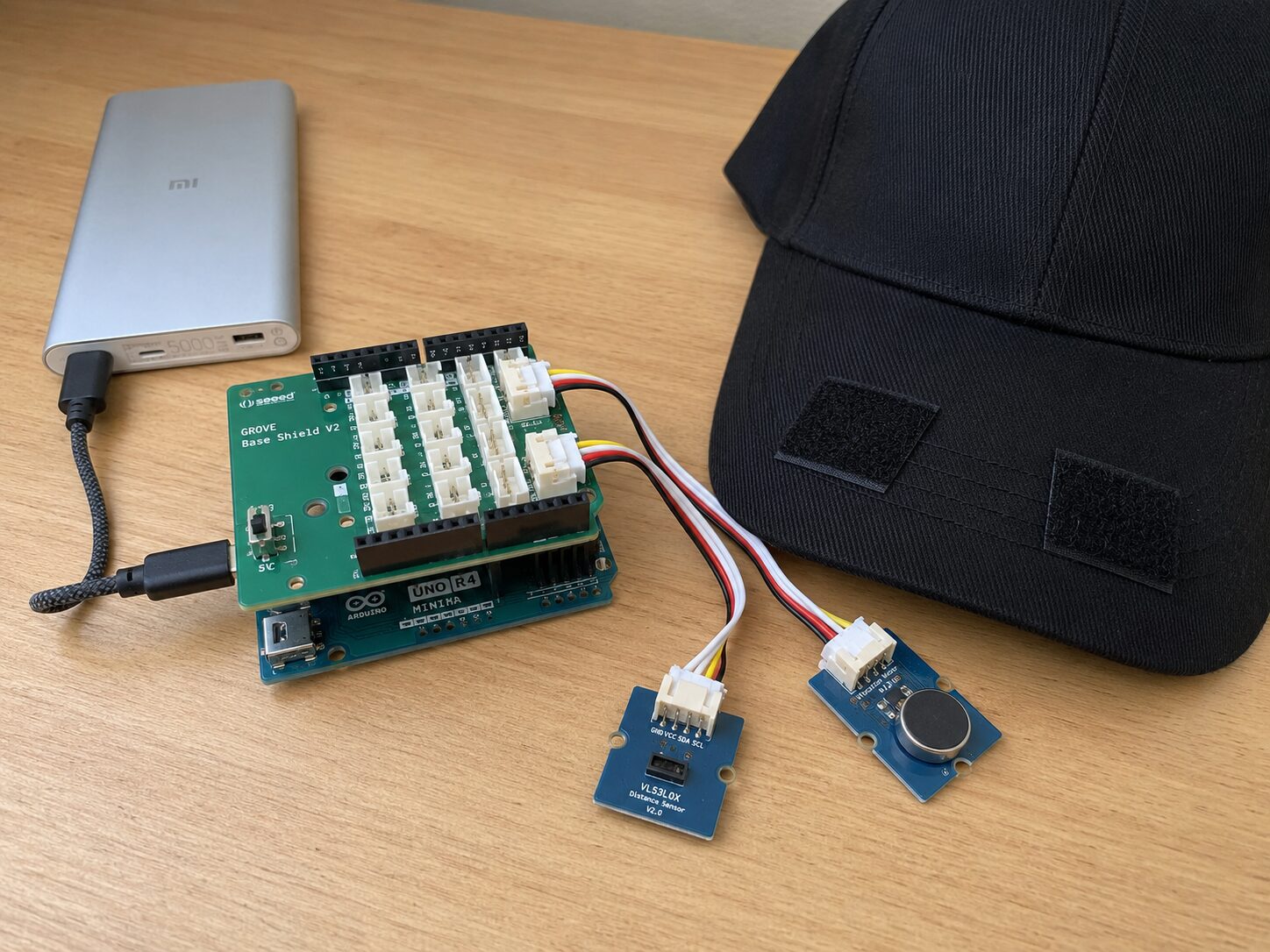
| Arduino UNO R4 Minima | The brain | €19.99 |
| Grove Base Shield V2 | Plug-in wiring — no soldering anywhere | €4.11 |
| Grove VL53L0X laser distance sensor | Indoor test sensor (~2 m) | €8.83 |
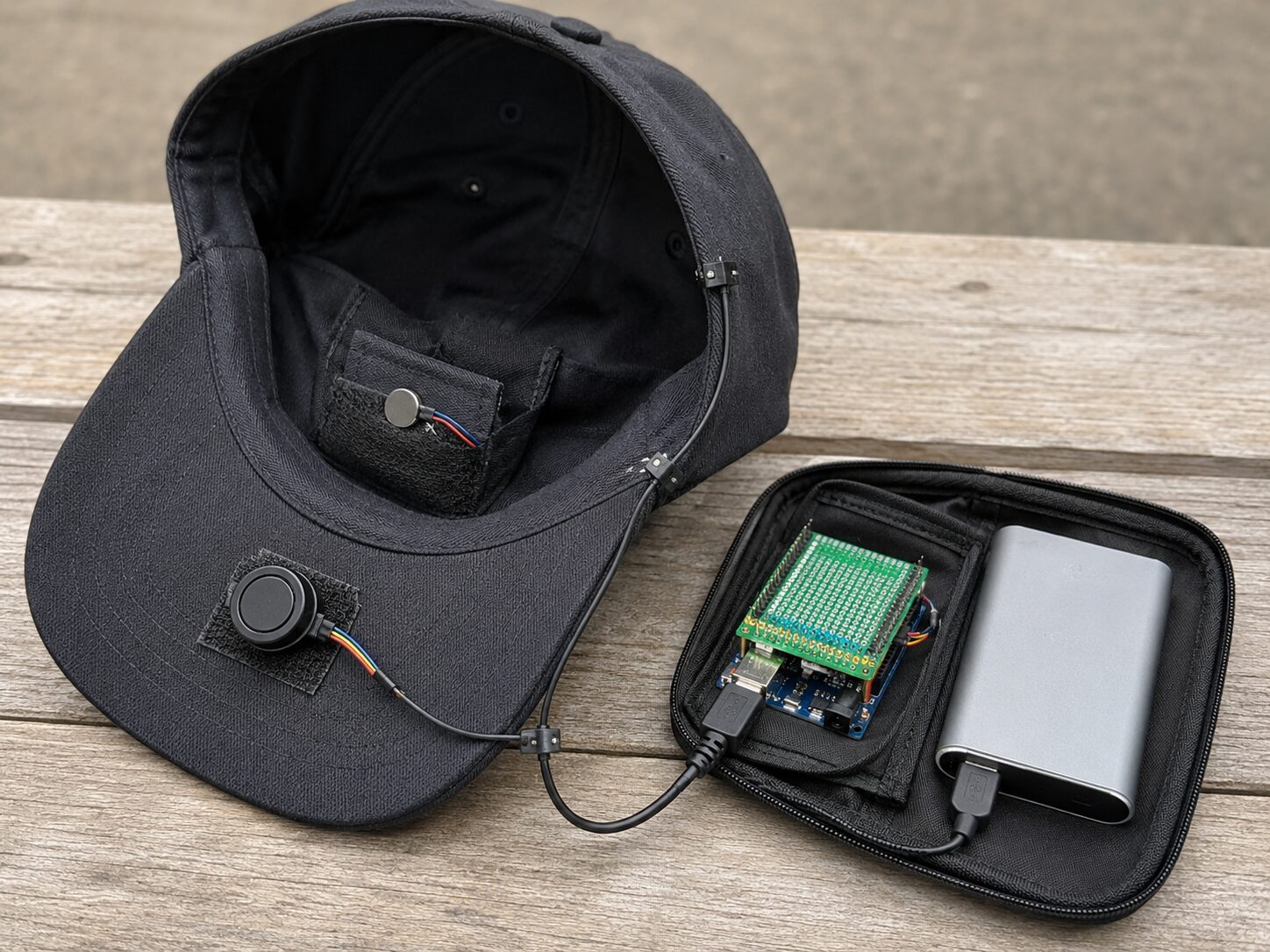
| Grove vibration motor | The tap on the head | €2.46 |
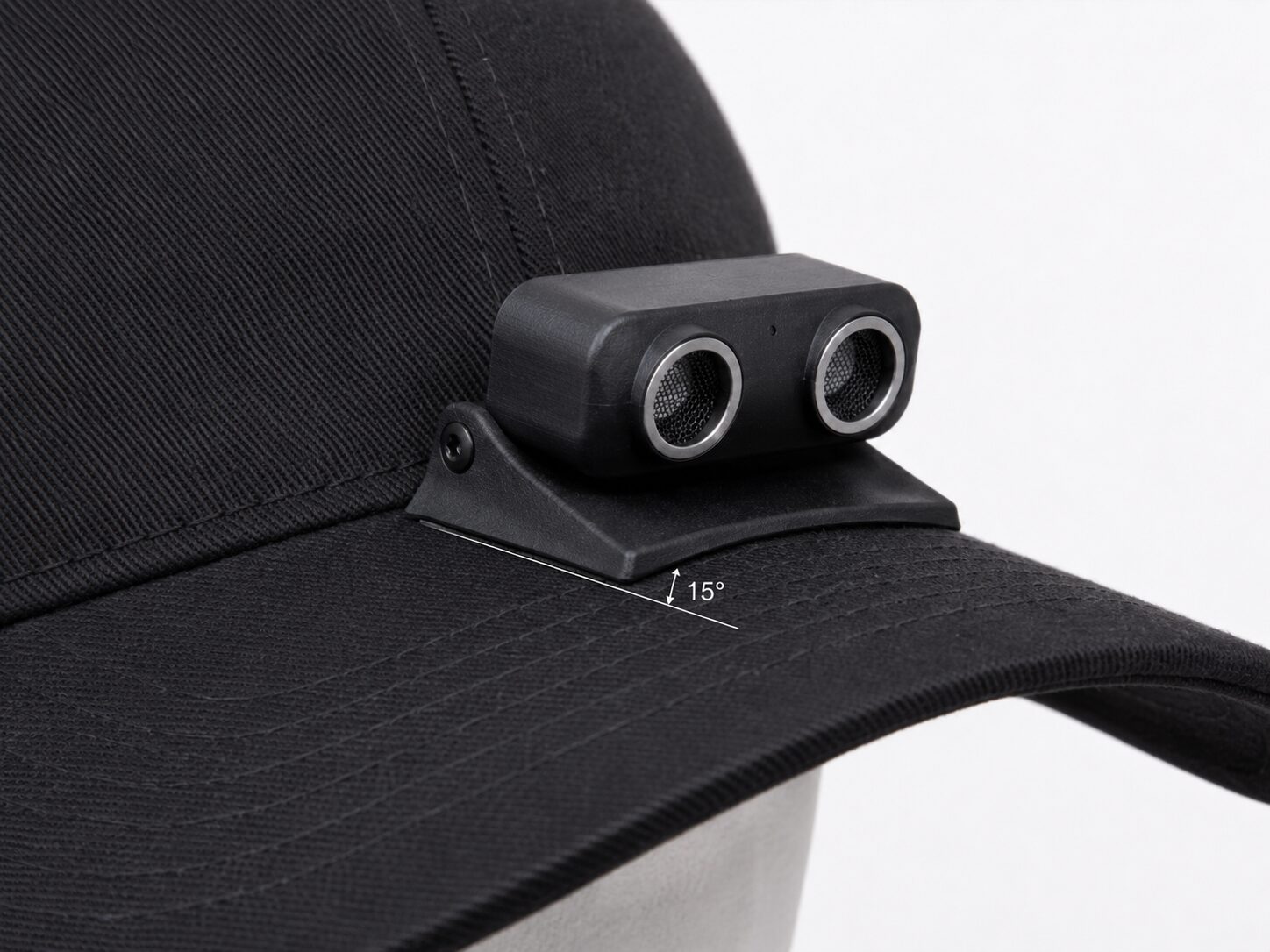
| DFRobot A02YYUW waterproof ultrasonic | Outdoor primary sensor | €20.90 |
| JSN-SR04T waterproof ultrasonic | Outdoor baseline / spare | €19.51 |
| Power bank, cables, jumpers | Power and plumbing | ~€35 |
| Baseball cap, Velcro, foam tape | The hat part of The Hat Project | ~€10 |
Prototype 1 — the €87 proof of concept
Prototype 1 exists to answer one question: is quiet, distance-coded vibration on your head actually useful and comfortable? Not "can electronics measure distance" — they can — but whether the interaction works for a human on a walk. Everything about this build is optimised for answering that fast and cheap.
What's in it
Why two outdoor sensors? Bright sunlight blinds cheap laser (ToF) sensors — one of the clearest findings in the research — so outdoors the plan is ultrasonic, which doesn't care about light at all. The two ultrasonic probes get A/B tested against each other.
How the warning works
| Zone | Distance | What you feel |
|---|---|---|
| Clear | beyond 1.8 m | Nothing. Silence is the default. |
| Far | 1.2–1.8 m | A soft pulse every second or so |
| Medium | 0.7–1.2 m | Pulses twice a second |
| Near | 0.35–0.7 m | Quick, insistent pulses |
| Danger | under 0.35 m | Rapid buzzing — look up now |
The firmware is deliberately paranoid about false alarms: readings are median-filtered and an obstacle must be confirmed by three consecutive readings before the motor is allowed to speak. False alerts killed every comparable product on the market — this project treats them as the primary enemy from day one.
The seven questions Prototype 1 must answer
- Can I distinguish several proximity levels through vibration alone?
- Is the vibration noticeable but not annoying over 20+ minutes of walking?
- Is the response fast enough at slow walking speed?
- Does it work in woodland shade — and how badly does direct sun degrade it?
- Can it detect thin branches, or only broad obstacles?
- Does head movement cause missed detections or false alarms?
- What warning distances feel natural?
The test plan
Desk first, cap second, trail last: bench tests against cardboard and wooden dowels (nobody has ever published data on whether these sensors can see a 2 cm twig — those tests will be original data), then a headband comfort trial, then an indoor obstacle course of towels and pool noodles, then a safe outdoor area with a sighted friend. Every session ends with a logged result. The full protocol, firmware code included, lives in the project's open documentation.
What it will look like
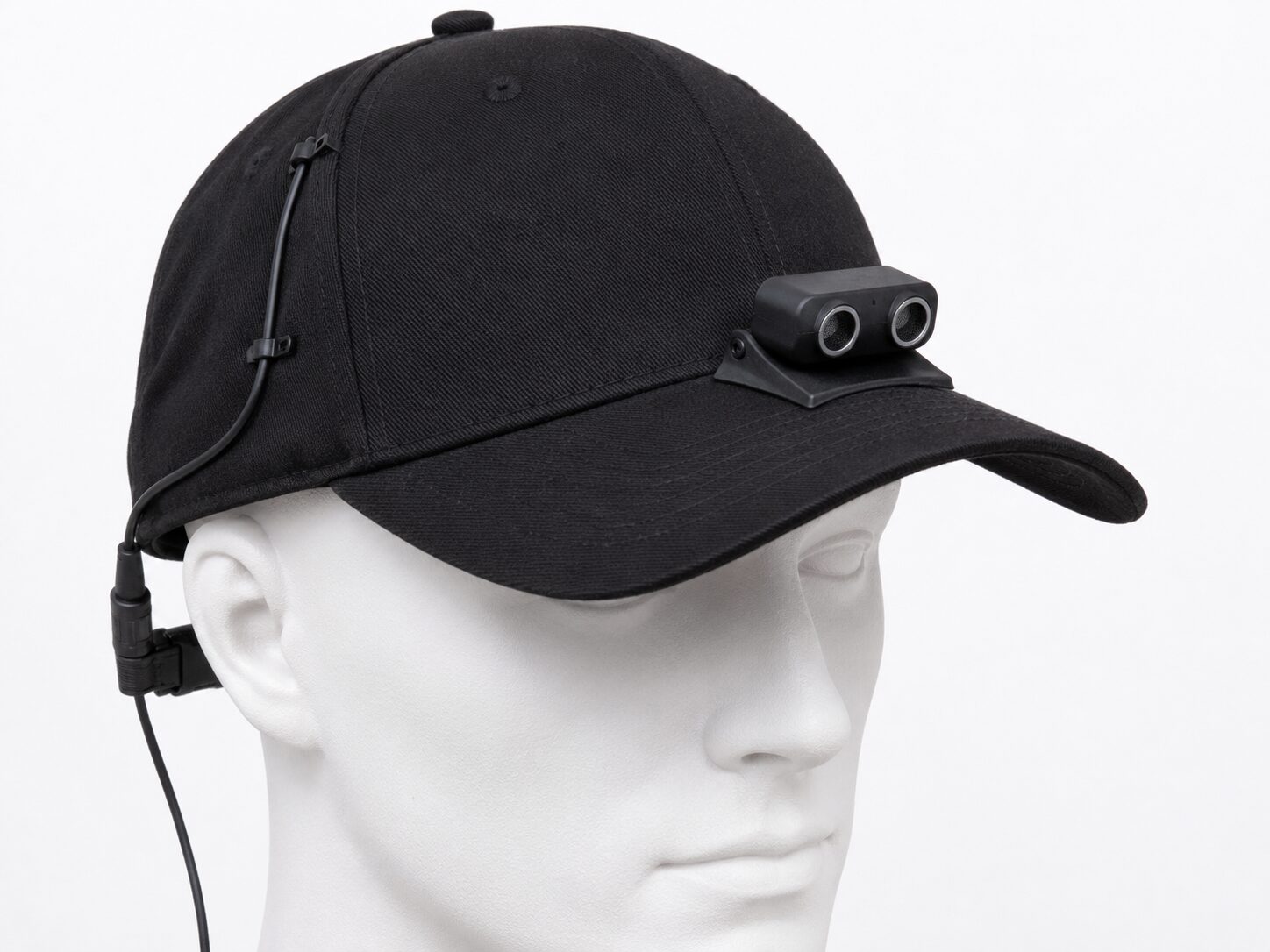
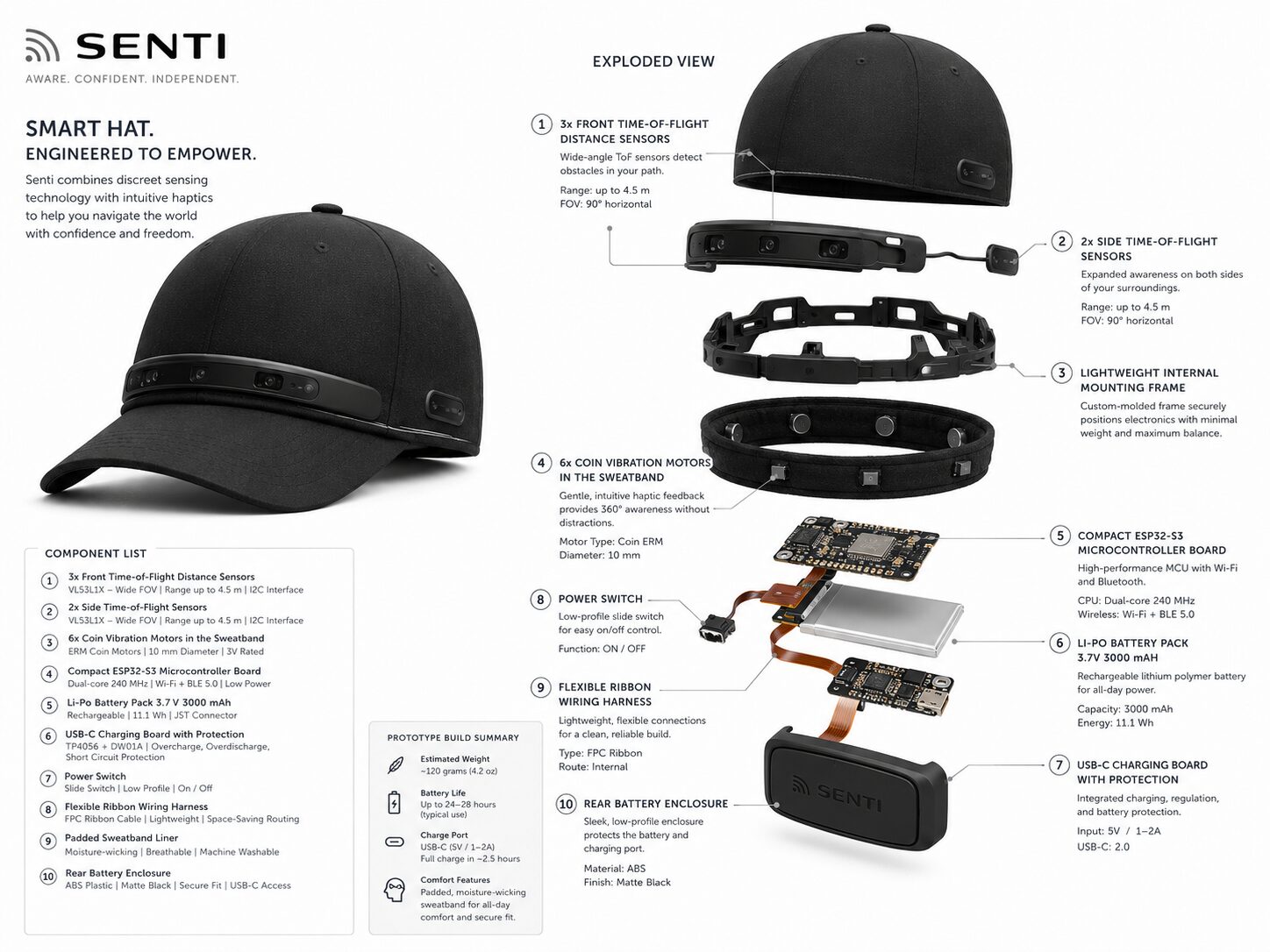
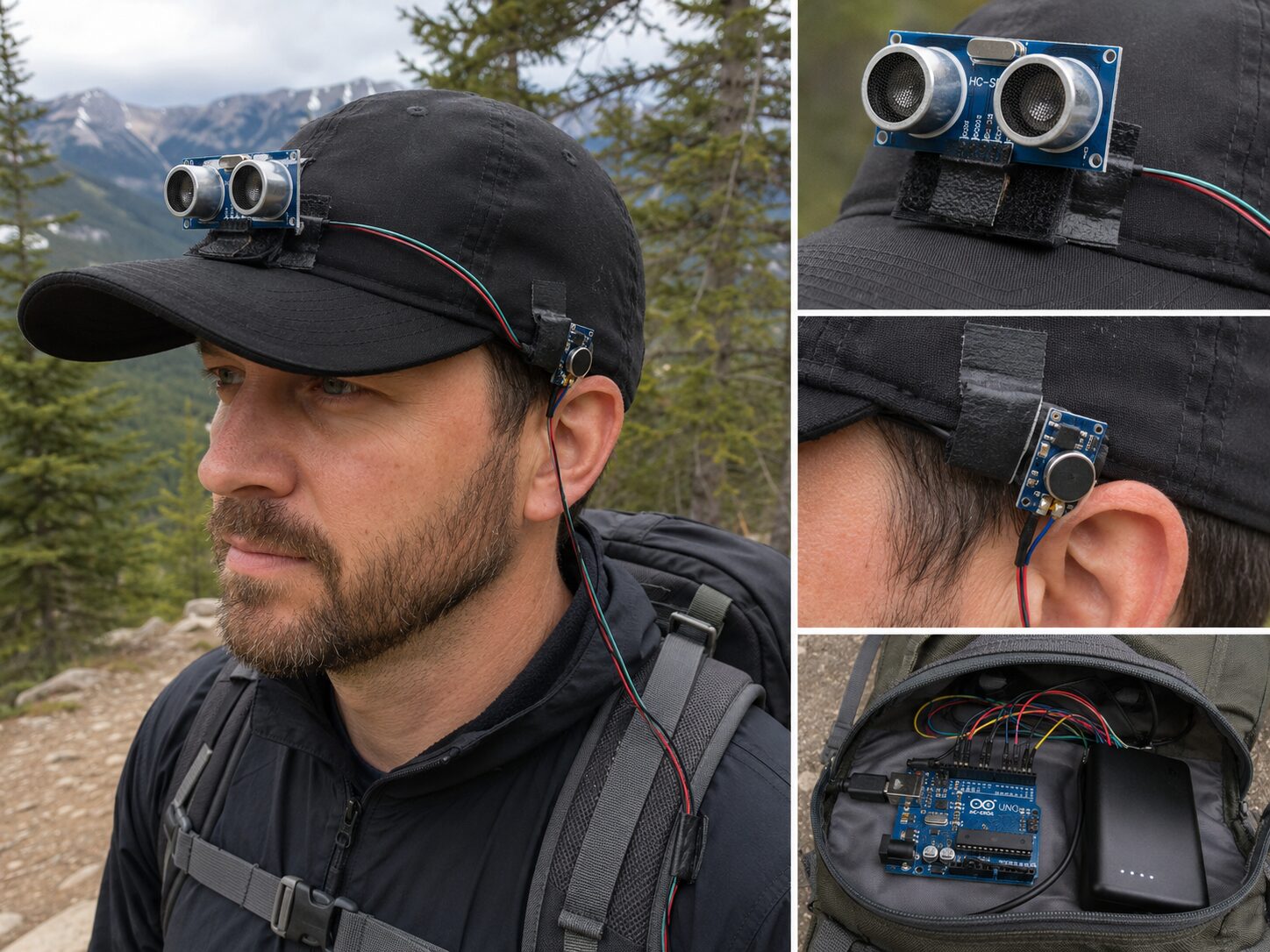
These are AI-generated concept mockups based on the actual parts list — useful for imagining the build, but honesty first: none of these are photos of a real device yet. When the parts arrive and the prototype exists, real photos replace these renders, warts and all.
Real build photos and test logs will appear here as they happen. The blog carries the running story.